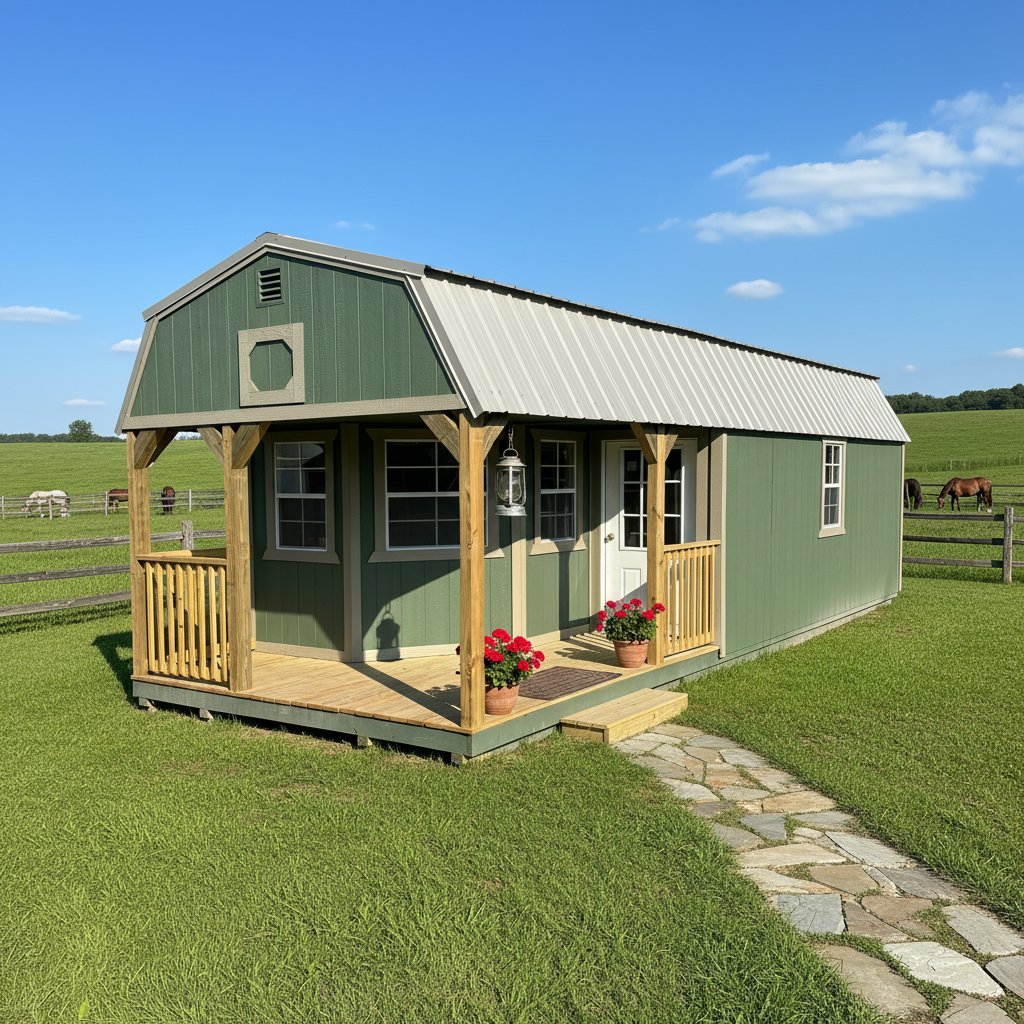
A pioneer lofted barn cabin is one of those structures that already has a lot of character the day it arrives, but it really comes into its own once you start making it your own. The gambrel roof, the loft, and the solid wood walls give you a strong starting point, and from there the choices you make on doors, windows, paint, and the interior are what turn a basic cabin into a space that actually fits your property and the way you plan to use it. The difference between a cabin that looks generic and one that looks like it was built for the spot is almost entirely in the customization.
The good news is that you do not have to do everything at once. A lot of the best upgrades are small and affordable, and you can add them over time as you figure out how you actually use the space. This guide walks through the main ways to customize a pioneer lofted barn cabin, from the outside in, with practical notes on what each choice gives you and what to watch out for.
Doors: The First Thing You and Everyone Else Sees
The door is the single biggest visual and functional choice on a cabin. It sets the tone for the whole building and it decides what you can actually get in and out.
A solid wood door with a small window in the upper half is the classic choice for a cabin, and it gives you a warm, finished look that fits the pioneer style. The window lets in light and lets you see out, which matters more than you would think when you are walking out to the cabin in the morning. A steel entry door with a nine light window is a more durable option that still looks good, and it seals better against weather than a wood door will over time.
Double barn doors on the front are the look most people picture when they think of a lofted barn cabin, and they make sense if you are moving large items in and out or if you want the cabin to read as a barn from a distance. The hardware matters here. Skip the thin stamped hinges and go with heavy duty strap hinges and a real latch, because a barn door that sags or sticks is a daily annoyance. A Dutch door, which splits horizontally so you can open the top and leave the bottom closed, is a charming option if the cabin is used as a guest space or a studio and you want light and air without letting in bugs or animals.
One detail that gets missed is the threshold. A wood sill rots over time and lets water in, so a metal or composite threshold is worth the small upgrade. It also gives you a clean step in and out, which matters when you are carrying a box or a bag of groceries.
Windows: Light, Air, and a Finished Look
A cabin with no windows is a dark box, and a dark box is a space you avoid. Windows do two things at once. They bring in natural light so you can see what you are doing without a flashlight, and they break up the wall space so the cabin looks like a small house rather than a storage container.
For a cabin that will be lived in or worked in, put at least one window on the wall where you will stand at a counter or a desk, so the light comes over your shoulder rather than in your face. A second window on the opposite wall gives cross ventilation, which is what keeps a small space from turning into an oven in summer. Single hung or sliding windows are easier to seal than awning windows, and they are simple to lock if you want to leave them cracked for airflow when you are not around.
If the cabin has a loft, a gable window in the upper end wall is a small upgrade that makes the loft usable. Without it, the loft is dark and hot, and you will not want to spend time up there. A gable window lets in light and gives hot air a place to escape, which is the same reason old barns had them. A pair of windows flanking the front door is a classic look that gives the cabin a balanced, finished front.
Shutters are a finishing touch that a lot of people skip and then wish they had not. Even nonfunctional shutters, mounted flat to the wall, add a layer of detail that makes the cabin look intentional. Paint them a contrasting color and you have a focal point that pulls the whole design together.
Colors: The Fastest Way to Make a Cabin Look Built In
Paint is the cheapest and fastest way to make a cabin look like it belongs on your property. The default on most pioneer lofted barn cabins is a stained wood exterior with a single trim color, and that is fine, but it is also what every other cabin in the catalog looks like.
The first choice is stain versus paint. Stain soaks into the wood and it is easier to maintain, because you can reapply it without scraping. Paint sits on top and it gives you a wider color range and a smoother finish, but it requires more prep when it is time to redo it. For a cabin that will live in the weather, stain is the lower maintenance choice. For a cabin that you want to look like a small house, paint is the better look.
When you pick colors, look at your house and your roof. Matching the cabin roof to the house roof is the easiest way to make the two feel related, and matching the trim color to the house trim ties them together without making them identical. A common approach is to paint the cabin body a neutral color that is close to the house body, the trim in the house trim color, and the door in an accent color that shows up somewhere else on the property, like a front door or a fence.
A dark door on a light cabin is a look that works in almost any setting. A red door on a gray cabin is classic and it reads as a barn even from a distance. A deep green or navy door on a white or natural wood cabin is a more modern look that still fits the pioneer style. Avoid bright colors on the body of the cabin, because they fade and they tend to look out of place next to a house that is painted in a quieter tone.
Interior Upgrades: The Part Most People Never Get To
The inside of a pioneer lofted barn cabin is where most owners stop short, and it is also where the biggest difference in daily use comes from. A raw interior with exposed studs and a bare floor is fine for storage, but it is not a space you want to work in or spend time in.
Start with the walls. Plywood or oriented strand board is the standard interior finish, and it is durable and easy to clean. If you want a more finished look, tongue and groove pine on the walls adds warmth and it makes the cabin feel like a real cabin rather than a shed. Paint the plywood white or a light color and the space feels larger and brighter, which matters a lot in a small building.
The floor is the next upgrade. A bare plywood floor is hard to clean and it shows every stain. A coat of porch and floor enamel gives you a surface that sweeps clean and holds up to foot traffic. If the cabin is a guest space or a studio, a floating wood floor or a sheet vinyl in a wood look gives you a surface that feels like a home rather than a workshop. A couple of thick rugs in the main area and the loft add warmth underfoot and they cut down on echo.
Insulation is what turns a three season cabin into a four season space. Fiberglass batts in the walls and roof, with a vapor barrier on the warm side, hold heat in the winter and keep the cabin from baking in the summer. If you are going to insulate, finish the interior so the insulation is covered, because exposed fiberglass is not something you want to be around.
The Loft: The Feature That Sets the Cabin Apart
The loft is the reason most people pick a lofted barn cabin over a single level model, and it is the most underused part of the building. A finished loft doubles the usable space in the cabin without adding a single foot to the footprint.
If the loft is for sleeping, start with the bed. A low platform frame or a mattress on a simple base keeps the sleeping surface low enough that you can sit up without hitting your head on the sloped ceiling. Push the bed into the corner where the ceiling is highest, and add a small reading light at the head of the bed so you are not climbing down to turn off a switch.
If the loft is for storage, add a drop down ladder or a ship ladder so you actually use it. Clear bins with labels on the short side let you see what is inside without pulling everything down, and shelves along the knee walls use the low space that is too short to stand in.
Insulate the roof above the loft and add a gable window for light and air. A loft without ventilation gets hot and stuffy fast, and a small vent fan or a window that opens makes the difference between a loft you use and one you avoid.
Lighting and Power: The Upgrade That Changes Everything
If you are going to use the cabin for anything beyond storage, run power to it. A dedicated circuit with a small subpanel gives you outlets, lights, and the ability to run a small heater or a fan. Even a single overhead light on a switch makes the cabin usable after dark, and a couple of outlets let you run a charger, a radio, or a small appliance without an extension cord snaking across the yard.
If running power is not an option, a solar lighting kit is a real alternative for basic light. A small panel on the roof charges a battery that runs a few LED fixtures inside, and it is enough for reading and doing quick tasks after the sun goes down.
A Few Details That Pull It All Together
A cupola on the roof ridge is a small addition that makes a pioneer lofted barn cabin look like a barn in the truest sense. It also vents hot air out of the upper level, which is a real functional benefit in a cabin with a loft.
A small porch or overhang over the door gives you a dry place to stand while you unlock the door, and it adds architectural detail to the front of the cabin. Even a simple shed roof overhang supported by two brackets changes the look and the usability.
Flower boxes under the windows are the last touch. They soften the hard lines of the cabin, they tie the building to the garden, and they give you a place to grow herbs or annuals that you can see from inside when the windows are open.
The point of all of this is that a pioneer lofted barn cabin does not have to stay the way it arrives. With the right doors, a few windows, a thoughtful color scheme, and a finished interior, it becomes a real part of your property, and a space you actually want to use instead of a box you walk past on the way to the garden.