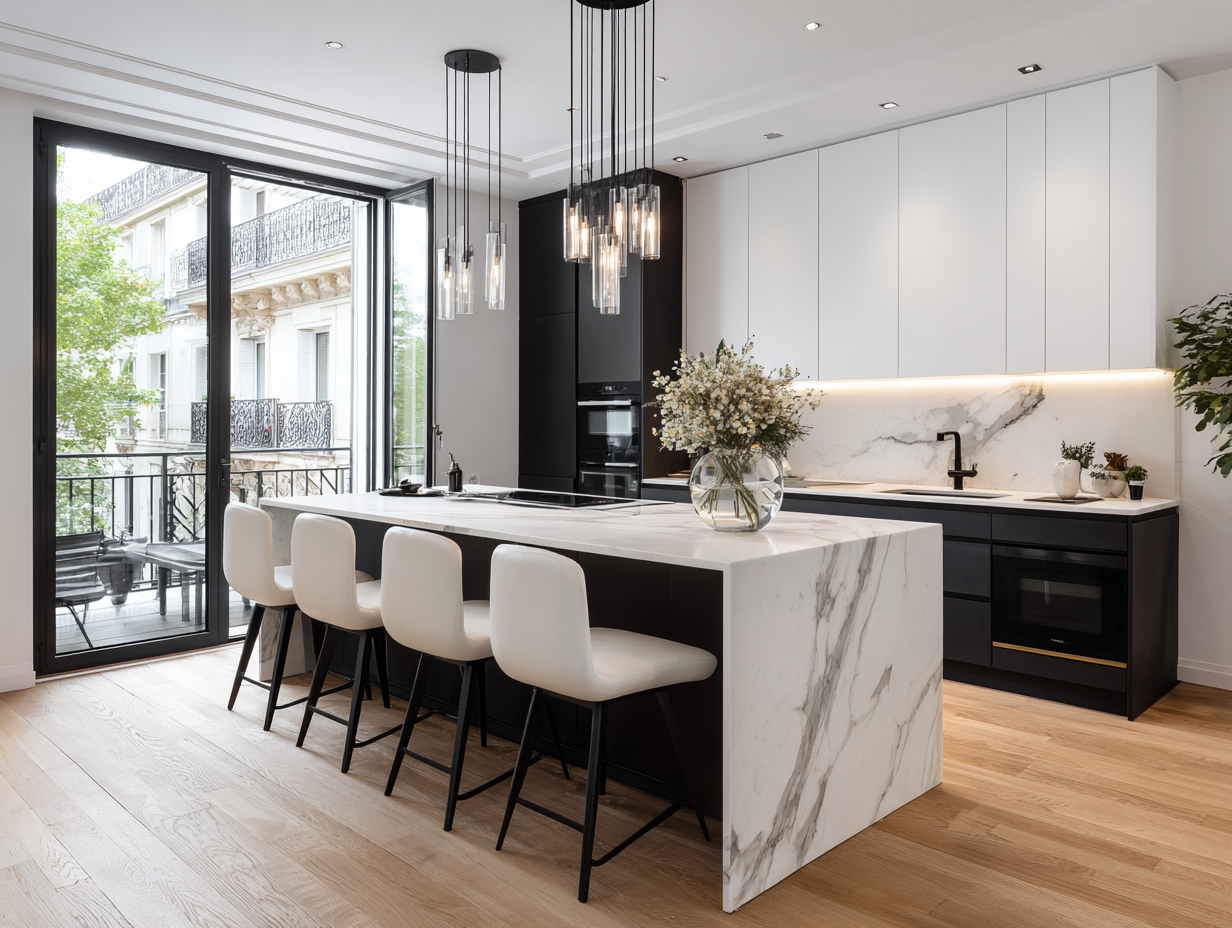
Black and white kitchens have become one of the most powerful design trends in modern homes. The look feels clean, bold, and timeless all at once. When done right, this color pairing can turn even a small kitchen into something elegant and eye-catching.
But creating the perfect balance between the two shades takes a little strategy. Too much black can make the room feel dark and heavy. Too much white can cause the space to look flat or plain. The secret is learning how to mix them in a way that feels natural and stylish.
Black and white kitchens work so well because the contrast is strong but simple. This pairing gives you a foundation you can keep minimal or dress up with texture, lighting, and small details.
Designers love this style because it offers endless ways to customize the mood—modern, classic, cozy, or luxury.
This guide will break down how you can build the perfect balance of contrast so your kitchen feels both beautiful and functional.
Start With the Main Background Color
Every black and white kitchen should begin with choosing the main base color. Most homeowners choose white as the foundation because it keeps the room bright and open. A white backdrop also makes black elements pop without overwhelming the eye.
White cabinets, white walls, or even white flooring can be the base that keeps the space clean. Once the base is set, black becomes the accent that adds sharp lines and strong edges.
If your kitchen has lots of natural light, you can safely add more black without making the room feel closed in. But if your kitchen is small or doesn’t get much sunlight, lean more toward white. This will keep the space feeling light, airy, and welcoming.
Use Black for Structure and White for Openness
The best black and white kitchens use each color for a specific purpose. White usually highlights open spaces, soft shapes, and surfaces that reflect light. Black, on the other hand, adds structure and definition. When you use them this way, the visual contrast feels intentional and balanced.
For example:
- White cabinets paired with black hardware
- White walls paired with black window frames
- White countertops paired with a black backsplash
This method creates a clean divide and makes every detail look sharp. When black outlines white surfaces, the room feels modern and bold without losing brightness.
Add Texture to Keep the Kitchen Warm
One challenge with black and white kitchens is avoiding a cold or flat look. Because the colors are so simple, the space can start to feel too plain if everything is smooth and shiny. This is where texture becomes important.
Textures add depth and warmth without breaking the color palette. A rough black backsplash, a matte black faucet, or a grainy white quartz countertop can make the kitchen feel more interesting. You don’t need color to make the room pop—texture can do that on its own.
Here are ways to add texture in a balanced way:
- Matte black cabinets instead of glossy ones
- White textured tile backsplash
- Black stone countertops with natural grain
- Brushed metal fixtures
- Soft white fabric bar stools
These small details keep the room from feeling stiff. The contrast becomes more natural and cozy instead of harsh.
Balance Light and Dark Surfaces
In black and white kitchens, the placement of light and dark areas creates the rhythm of the room. A common mistake is concentrating too much black in one spot. If all your black elements sit on one side of the kitchen, the space will look unbalanced.
A better approach is to spread the dark elements around. If your lower cabinets are black, consider adding black light fixtures or black bar stools to balance the top half of the room. If your backsplash is black, you can match it with black handles or a black faucet. These repeats help the design feel unified.
White surfaces should also be placed throughout the space. For example, if your island is black, adding white countertops on the island can soften the weight. The goal is not to split the colors equally but to let them anchor each other.
Choose the Right Countertops for Contrast
Countertops play a big role in setting the tone of black and white kitchens. White countertops on black cabinets create a clean and crisp look. Black countertops on white cabinets make the space feel bold and dramatic.
White countertops work well if you want a softer, more open feel. They bounce light around the room and keep everything bright. They’re great for small kitchens or spaces with limited lighting.
Black countertops create a strong focal point. They make a powerful first impression and often look more luxurious. They pair beautifully with white marble walls or white cabinets. If you choose black countertops, make sure the rest of the kitchen has enough white elements to balance the weight.
Use Lighting to Balance the Colors
Lighting is one of the most effective tools for shaping the mood of black and white kitchens. Because black absorbs light and white reflects it, lighting must be placed carefully.
Warm lighting can keep black surfaces from feeling too harsh. Pendant lights above the island, under-cabinet lights, and recessed ceiling lights can brighten the shadows and highlight details.
White surfaces spread the light naturally, so adding brightness near white walls or cabinets keeps the room feeling fresh. Meanwhile, lighting over black surfaces creates beautiful highlights that add dimension.
If your kitchen has black ceilings, black walls, or black islands, consider brighter lighting to avoid a heavy atmosphere. For white-dominant kitchens, even soft lighting can create a gentle and cozy feel.
Add Metal Accents for Visual Balance
Metal accents—such as chrome, brass, gold, or brushed nickel—can add a layer of elegance and help balance the sharp contrast of black and white. These accents act as a bridge between the two shades, softening transitions.
Black and white kitchens look stunning with:
- Gold cabinet handles
- Brass faucets
- Chrome bar stools
- Stainless steel appliances
Appliances, especially, play a major role. Stainless steel fits perfectly in black and white kitchens because it sits between the two shades. It doesn’t break the color palette but adds shine, movement, and sophistication.
Use Patterns to Break the Strict Contrast
Patterns can soften the hard edges of black and white kitchens. A patterned tile floor, for example, uses both colors in a playful, eye-catching way. This breaks the strict divide and makes the kitchen feel livelier.
Herringbone tile, geometric prints, checkerboard flooring, or marbled surfaces all introduce softness without adding new colors. They help the design flow naturally and add detail that feels artistic and modern.
If your cabinets and walls are simple, a patterned floor can become the star of the kitchen. If your countertops are bold, use a soft pattern for balance instead of something too busy.
Keep the Space Functional and Uncluttered
Black and white kitchens look best when the layout is clean and uncluttered. The simple color palette shines when the surfaces are open and well-organized. Clutter can easily disrupt the balance and make the kitchen feel chaotic.
Using storage solutions like deep drawers, cabinet organizers, and hidden shelving helps keep the kitchen tidy. When the space is clean, the contrast between black and white stands out more beautifully.
Another helpful tip is choosing decor that enhances the color theme. For example:
- A black fruit bowl on a white counter
- White ceramic jars near a black oven
- Black picture frames on a white wall
Small touches like these reinforce the color scheme and keep everything stylish.
Bring Warmth With Natural Materials
When working with black and white kitchens, adding natural materials helps soften the contrast and make the space feel more welcoming. Wood, stone, and woven fabrics all introduce warmth without distracting from the color palette.
Light wood tones pair beautifully with black and white because they add warmth without overpowering the design. A wooden island stool, cutting board, or open shelf can make the kitchen feel grounded and cozy.
Green plants are another simple way to bring life into the room. The green color stands out beautifully against the black and white backdrop, adding freshness and energy.
Keep the Contrast Consistent Throughout
The best black and white kitchens feel intentional from top to bottom. Each choice ties into the larger design, and the contrast is used thoughtfully. The key is consistency. When a detail feels out of place, the balance can break.
If your cabinets are modern and sleek, keep your hardware, lighting, and decor modern as well. If your kitchen has a classic look, use classic shapes and finishes for your accents. The contrast works best when every element speaks the same design language.
Final Thoughts
Black and white kitchens are popular because they offer a mix of elegance, simplicity, and boldness. This color pairing never goes out of style and fits homes of any size. By balancing contrast with texture, lighting, and thoughtful placement, you can turn a plain kitchen into a stunning masterpiece.
The secret to perfecting this look is not about choosing equal amounts of black and white. It’s about letting each shade highlight the other. When the balance feels natural, the kitchen becomes both beautiful and functional. With the right choices, your black and white kitchen will feel timeless, modern, and welcoming for years to come.