Household dust is more than just an eyesore on your coffee table—it can harbor pet dander, pollen, mold spores, and dust-mite allergens that chip away at both comfort and respiratory health. Better indoor air quality rarely comes down to one magic product or trick; it’s the result of source control, proper ventilation, humidity management, and consistent cleaning all working in tandem. Choosing and using a suitable vacuum plays a role in this broader routine, but it’s only one piece of the puzzle. This guide walks through practical, evidence-informed steps for everyday households, with extra care noted for anyone managing asthma or allergies.
Why Household Dust Matters
Dust itself is a grab-bag of fibers, skin cells, soil, pollen, and pet material that settles on surfaces and gets kicked back into the air whenever you walk across a room, clean, or run the heat. Cutting down on dust can reduce exposure to certain irritants, but it won’t eliminate every pollutant in your home or promise symptom relief on its own. It helps to think in three categories: settled dust (the stuff you can wipe or vacuum away), airborne particles (which call for ventilation or filtration), and biological allergens like mold spores or dander. Public-health guidance from organizations such as the EPA and CDC consistently points toward multi-pronged approaches rather than a single fix.
Identify the Main Sources of Dust
Indoors, carpets, upholstery, bedding, and cluttered storage areas are magnets for dust, and pet dander or lingering moisture only add to the problem. From outside, soil, pollen, and traffic particles sneak in through shoes, open windows, and vents—so doormats and a shoes-off policy at the door can make a real difference.
Dust-source checklist:
– Bedrooms: mattresses, bedding, carpets
– Living rooms: upholstery, curtains, shelves
– Entryways: floors, mats, closets
– Anywhere with soft furnishings or clutter
Use Cleaning Methods That Capture Dust
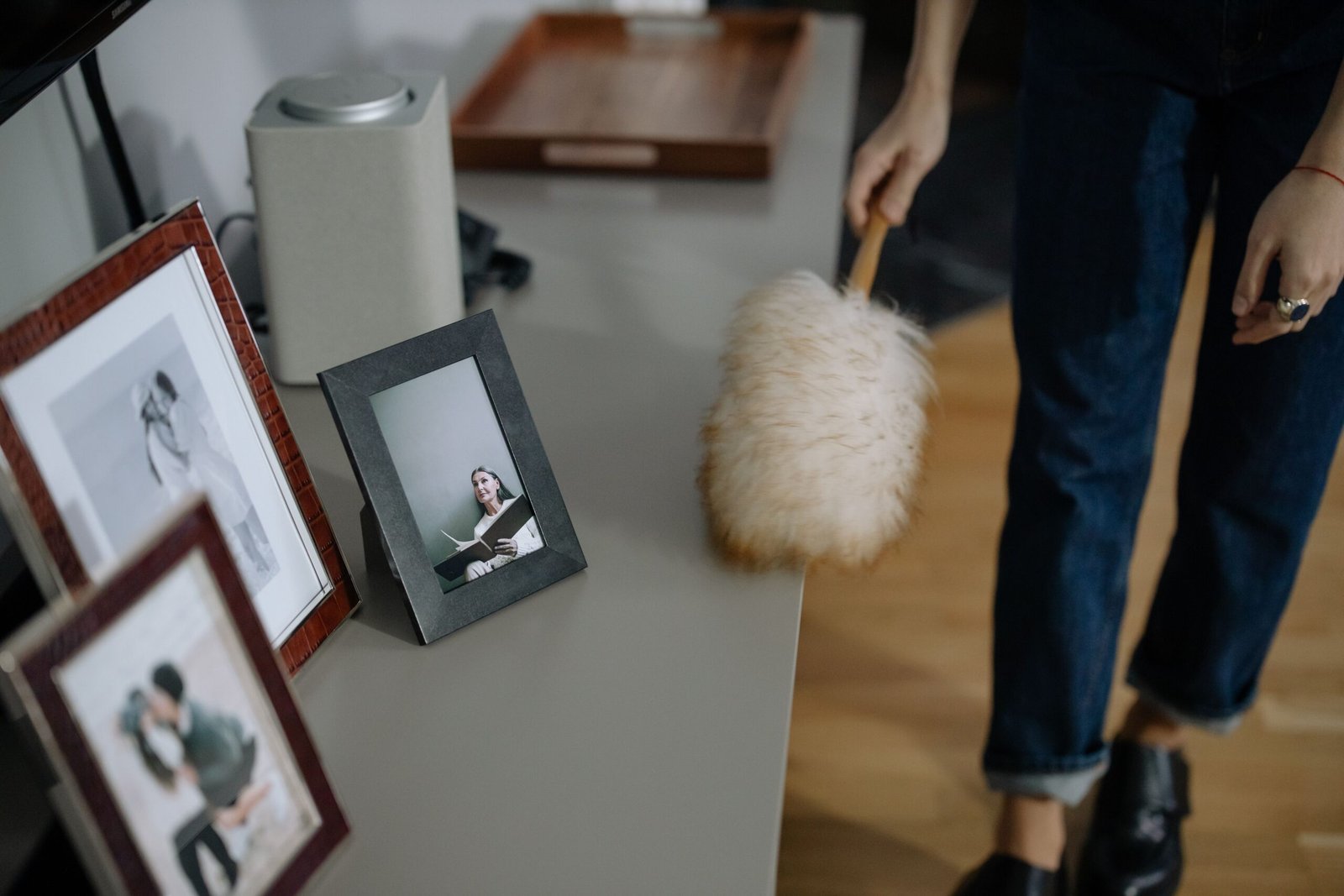
Damp dusting with a microfiber cloth traps particles rather than sending them airborne, which is exactly what you want. Work from high to low—ceilings and shelves before floors—so you’re not undoing your progress by stirring dust back onto surfaces you already cleaned. Pay extra attention to baseboards, blinds, and the areas under furniture, and wash your cloths often rather than letting them get overloaded. It’s also worth going easy on fragranced cleaning products, particularly in households where someone is sensitive to scents.
Approach Carpets, Upholstery, and Floors Strategically
Soft furnishings tend to hold onto allergens far more stubbornly than hard surfaces do, so clean carpets and upholstery based on manufacturer recommendations and your household’s specific needs—more frequently if you have pets or young kids underfoot. Don’t assume hard floors are off the hook, though; dust has a way of settling into cracks and corners, so regular damp cleaning still matters there too.
Using a Vacuum Safely and Effectively
Vacuuming is an important part of a dust-reduction routine, but it’s not a cure-all on its own. Look for features like effective filtration, sealed airflow, and attachments suited to upholstery or tight crevices, and keep up with routine maintenance to get the most out of them. Keep in mind that vacuuming can temporarily stir up settled particles, so if allergies are a significant concern, it may be worth stepping out of the room while you clean. Unsurprisingly, a home with pets and wall-to-wall carpeting will need more frequent, thorough vacuuming than one with mostly hard flooring.
Manage Humidity and Moisture
Excess moisture is practically an invitation for mold and dust mites. Try to keep indoor relative humidity somewhere between 30% and 50%, adjusting slightly depending on your climate. Fixing leaks promptly, running exhaust fans, and using a dehumidifier when needed all help keep conditions in check. A basic hygrometer is an inexpensive way to monitor humidity levels, though any established mold problem is usually best left to professional remediation.
Reduce Bedroom Allergen Exposure
Wash bedding regularly in the hottest water the care label allows, and consider allergen-proof covers for mattresses and pillows. For anyone particularly sensitive, cutting back on unnecessary fabric and clutter in the bedroom can also help, according to respiratory-health guidance.
Improve Ventilation Without Introducing More Pollution
Good ventilation dilutes indoor pollutants, but only when the outdoor air is actually worth bringing in. Exhaust fans, meanwhile, are useful for clearing out moisture and combustion byproducts. Since filtration and ventilation serve different purposes, it’s worth checking outdoor air quality before throwing open the windows during wildfire smoke or high pollen events.
Build a Practical Cleaning Routine
Regular tasks: damp-wipe surfaces, clean floors, manage pet areas, ventilate moisture-prone rooms.
Periodic tasks: clean under furniture, wash curtains and rugs, inspect HVAC filters, reduce clutter.
Consistency tends to matter more than the occasional deep clean, so it’s worth tailoring the frequency of these tasks to fit your household’s actual habits and needs.
Common Mistakes to Avoid
Dry-dusting, ignoring soft furnishings, overdoing it with fragrance, skipping vacuum maintenance, and opening windows during poor air-quality days can all quietly undo your efforts. The key takeaway: effective dust control comes from combining cleaning with moisture management, ventilation, and source reduction—not from leaning on any single method.
When to Seek Professional or Medical Advice
If you’re dealing with persistent mold, water damage, or a pest problem, it’s time to bring in a professional. And if respiratory symptoms linger despite your best efforts, a conversation with a doctor is worthwhile. These suggestions are meant as general information, not a substitute for personalized medical guidance.
Keeping Indoor Air Cleaner Over Time
Identify your dust sources, clean in ways that capture rather than scatter particles, stay on top of moisture, and keep ventilation systems in good shape. Start with whichever area of your home collects the most dust, see what works, and build sustainable habits from there.